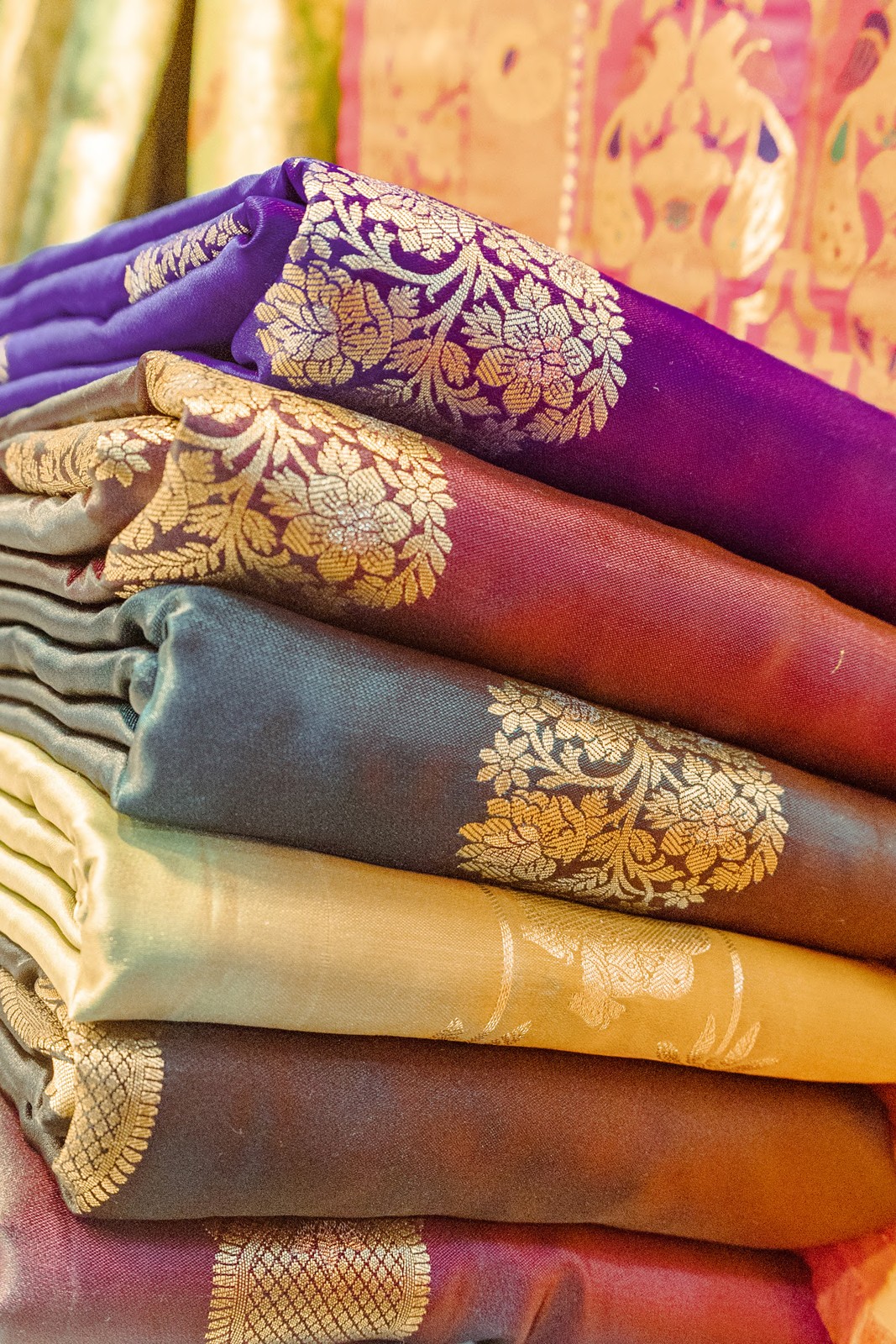
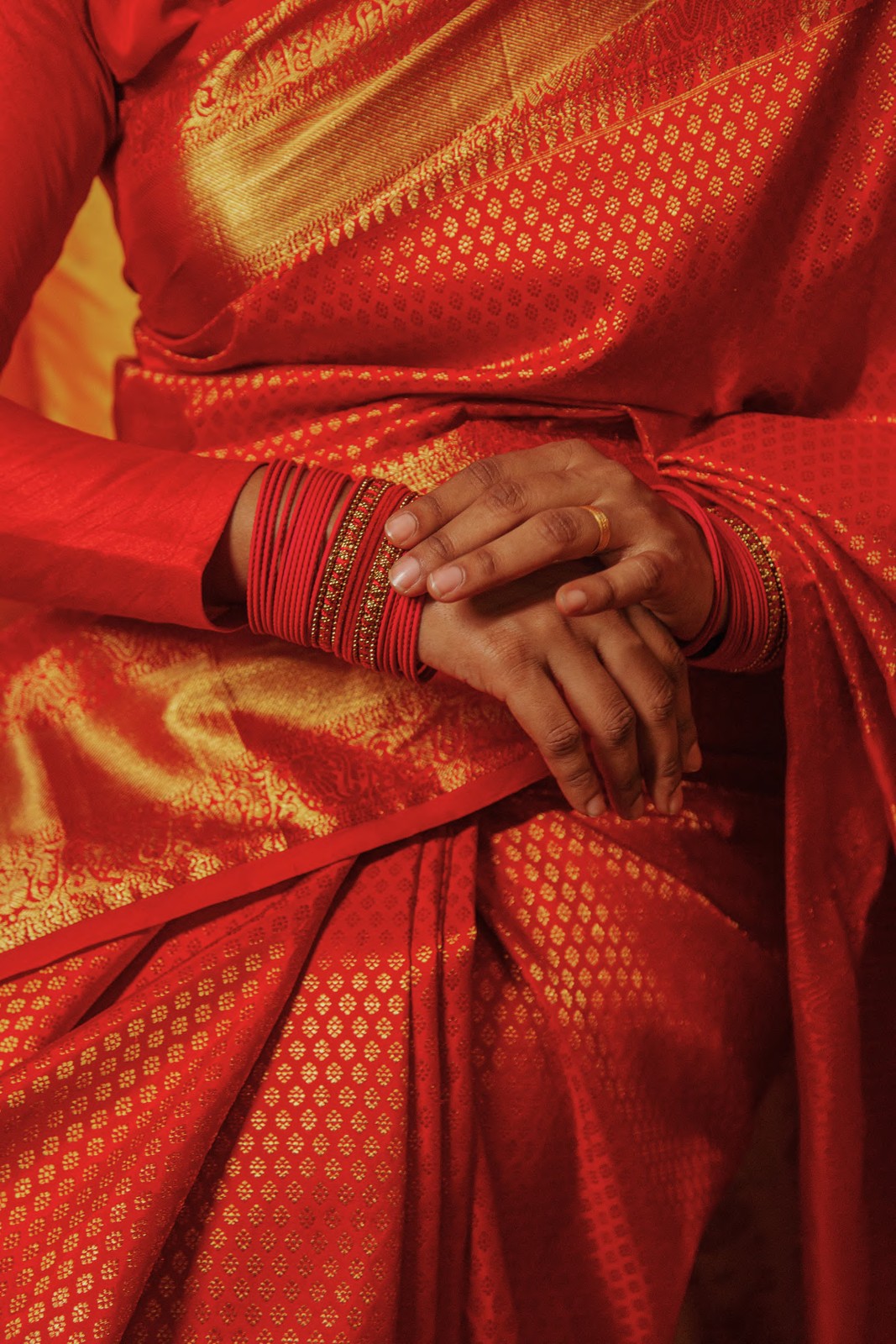
Craftsmanship
Learn the cloth before you buy the saree
Zari purity, the korvai join, handloom against powerloom. Everything we would explain across the counter, written down.
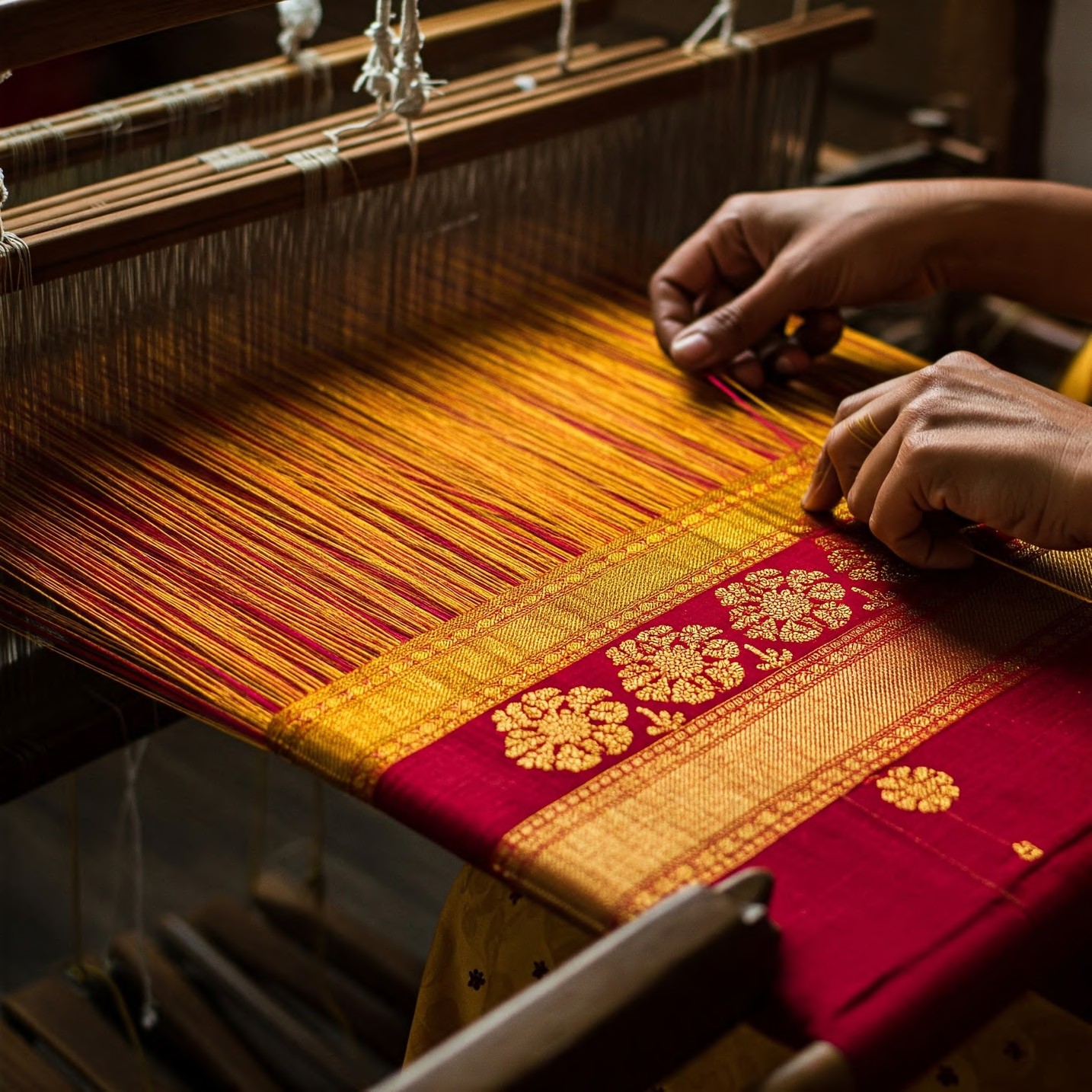
How a saree is made
Six weeks to four months, thread by thread
01
The silk arrives raw
Mulberry yarn is degummed, dyed in small copper vats and sun-dried. Colour is matched by eye against a swatch, never a screen.
02
The warp is set
Five to seven thousand threads are drawn through the reed by hand. A single crossed thread and the whole saree is discarded.
03
Zari is wound
Pure zari is silver drawn into wire, gilded in gold and twisted onto silk core. We test it in front of you before you pay.
04
The body is woven
Six to eleven weeks on a pit loom. On heavy Banarasi bridals, three weavers share one loom for four months.
05
The pallu is built
In Paithani, the peacock is tapestry-woven weft by weft with no floats behind — the reason it reads the same on both sides.
06
It reaches our counter
Minal inspects the join, the selvedge and the fold line. What we cannot vouch for, we do not put on the shelf.
Zari purity
Three kinds of gold, named honestly
Pure zari
Silver wire gilded with gold, twisted on silk. Tarnishes gracefully, holds resale value, and is weighed before we quote.
How to tell
Burn test leaves a fine silver thread. Feels cool and heavy.
Tested zari
Half-fine — silver content certified but lower gilding. Excellent daily wear at a fraction of the price.
How to tell
Slight grey cast under sunlight, still soft to fold.
Art zari
Polyester-core metallic. Bright, light and inexpensive — perfectly honest as long as it is named as such.
How to tell
Warm to touch, springs back when creased.
“Pay the weaver before the warp is set. Everything else in this business follows from that.”
Anilkumar Barmecha
Handloom or powerloom
Both are honest. Only one is ever sold as the other.
We stock both and price both fairly. What we will not do is call a powerloom saree a handloom one. Here is how you check for yourself.
| What to check | Handloom | Powerloom |
|---|---|---|
| Selvedge | Slightly uneven, human | Machine-perfect, identical |
| Reverse side | Clean, floats cut by hand | Long floating threads |
| Motif repeat | Minor variation piece to piece | Exact repeat every time |
| Weight | Denser, holds the pleat | Lighter, flatter drape |
| Time | 6 weeks to 4 months | Under a day |
The Weaving Map
Where each saree in this house was made
Fourteen towns, fourteen looms, fourteen ways of doing the same impossible thing. Choose one.
Paithani
Yeola, Maharashtra
- History
- Woven since the Satavahana period, revived under the Peshwas of Pune.
- Technique
- Tapestry technique — the pallu is built weft by weft with no floats behind.
- Motifs
- Mor (peacock), asawali vine, muniya parrot, narali border.
Before you buy
Six things we would tell you at the counter
Nothing here is a sales line. If the answer is inconvenient for us, it is still the answer we give.
Ask us to test it at the counter — we do it in front of you, before payment. Pure, tested and art zari are three different things and we name which one you are holding.